Our Commission
The story so far
The Elmbridge Poverty Truth Commission (PTC) is being co-facilitated by Tom Walden, Policy and Communications Manager at Walton Charity, and Alicia Mason, Walton Charity’s Community Engagement Coordinator. Starting in October 2025, we’ll add a new diary entry here every month reflecting on the progress of our Commission thus far.
August 2026
The launch event is now just a month away, and we’re in full planning mode. There’s a lot to sort out, from what and how our Community Commissioners are sharing, to the guest list, running order, room layout, caterers, AV tech, videographer, transport and parking arrangements for attendees, and surely many other things that will occur to us in the days leading up to the event.
But it does feel like things are becoming clearer now than they were a month ago. With help from our colleague Natalie, we’ve sent out two rounds of invitations and we’ve got a provisional running order, with lots of group activities in addition to individual contributions from Community Commissioners. They have speeches, videos, poems and performances planned, and we’re confident that these will bowl over the Civic Commissioners.
There are several ideas we’re looking to bring out during the launch event:
· Contrary to popular belief, not everyone in Elmbridge is well off. It’s one of the most unequal boroughs in the UK, and this inequality is bad for everyone, even those who have more.
· Sometimes, it doesn’t matter how hard you try. If you don’t have access to the information and resources you need or you don’t know the right people, you’re going to struggle, particularly if you’re under time pressure and you’re facing one difficult thing after another.
· When you’re struggling, it can make a huge difference if someone really takes the time to see you, listen to you and treat you as a human being.
· We need to work together to solve problems and share knowledge about the kind of support that is out there.
A flurry of Civic Commissioners have joined us in the last few weeks, but sadly, one or two Community Commissioners have had to drop out. That’s probably the biggest challenge that’s faced us so far: bringing people on board and helping them to stay there. Sometimes life simply gets in the way: work, other commitments, illness or immigration status mean that people can’t keep coming to meetings. For those who can make it, the regular commitment brings us all together and keeps motivation going. In the run-up to the launch event, we’ve been having evening meetings for those who can’t make it during the day, just to make sure that people who otherwise wouldn’t be able to come can stay involved. We want to hear from as many voices as possible.
We are asking a great deal from our Commissioners. Over a period of several months, or even years, we are asking them to find time in their hectic schedules to come along and share some of the most painful experiences of their lives with a group of people who start out as strangers. We are asking them to put their time and energy into volunteering their experience and wisdom to come up with solutions to the problems that Elmbridge faces. The Poverty Truth Commission is far from easy. But this intense, sustained commitment is also its great strength. We are forming a community that looks out for its members, gives everyone the chance to be heard, and, we hope, will ultimately be more effective in finding creative ways to make life better for people. Every time we meet, we come away full of new ideas for the launch event. I’m hopeful that we can carry this into our full Commission meetings, when Community and Civic Commissioners finally come together.
Alicia Mason

July 2026
Well, we may be in the middle of a drought here in Elmbridge, but one thing we certainly haven’t been short of this month is new Commissioners, of both the Community and Civic variety. In our latest Commissioner meeting, we had our biggest turnout ever, with three new faces alongside our by-now seasoned veterans. A couple more Community Commissioners may still yet join us between now and the launch event. It feels good to have a bit of momentum going, especially with the launch event now just two months away. Between now and then, we need to have something that we’re excited to share with our Civic Commissioners to help get them on board and ready to work with us. I know that we will get from Point A to Point B within that time, but I don’t know exactly how just yet.
That’s sometimes nerve-wracking, and sometimes exciting. The pendulum swings towards exciting when I think about all the artists who’ve expressed an interest in working with our Commissioners, inspiring them to prepare a creative piece for the launch. I can’t wait to see what they come up with.
I’m also excited by all the interest we’ve received in the Commissioners’ Gathering in October. Within two hours of sending the invitation out, I had multiple emails in my inbox from Commissioners telling me that they’d already signed up. This will give them the chance to meet other Commissioners from around the country to continue building new friendships and exchanging ideas. Thanks to last year’s Commissioners’ Gathering, we were able to collaborate with a Community Commissioner from East Anglia, who helped us get the word out about what we’re doing here in Elmbridge.
Our list of Civic Commissioners is also growing. This month, we’ve confirmed another member of the incoming East Surrey Council, along with leaders at Surrey Lifelong Learning Partnership, Mary Frances Trust and Elmbridge CAN, and potentially Princess Alice Hospice as well. We’re also planning an information session for our Civics in September, and Jonathan Lees from The Good Company has kindly agreed to take part and share his experience of being part of the East Surrey PTC.
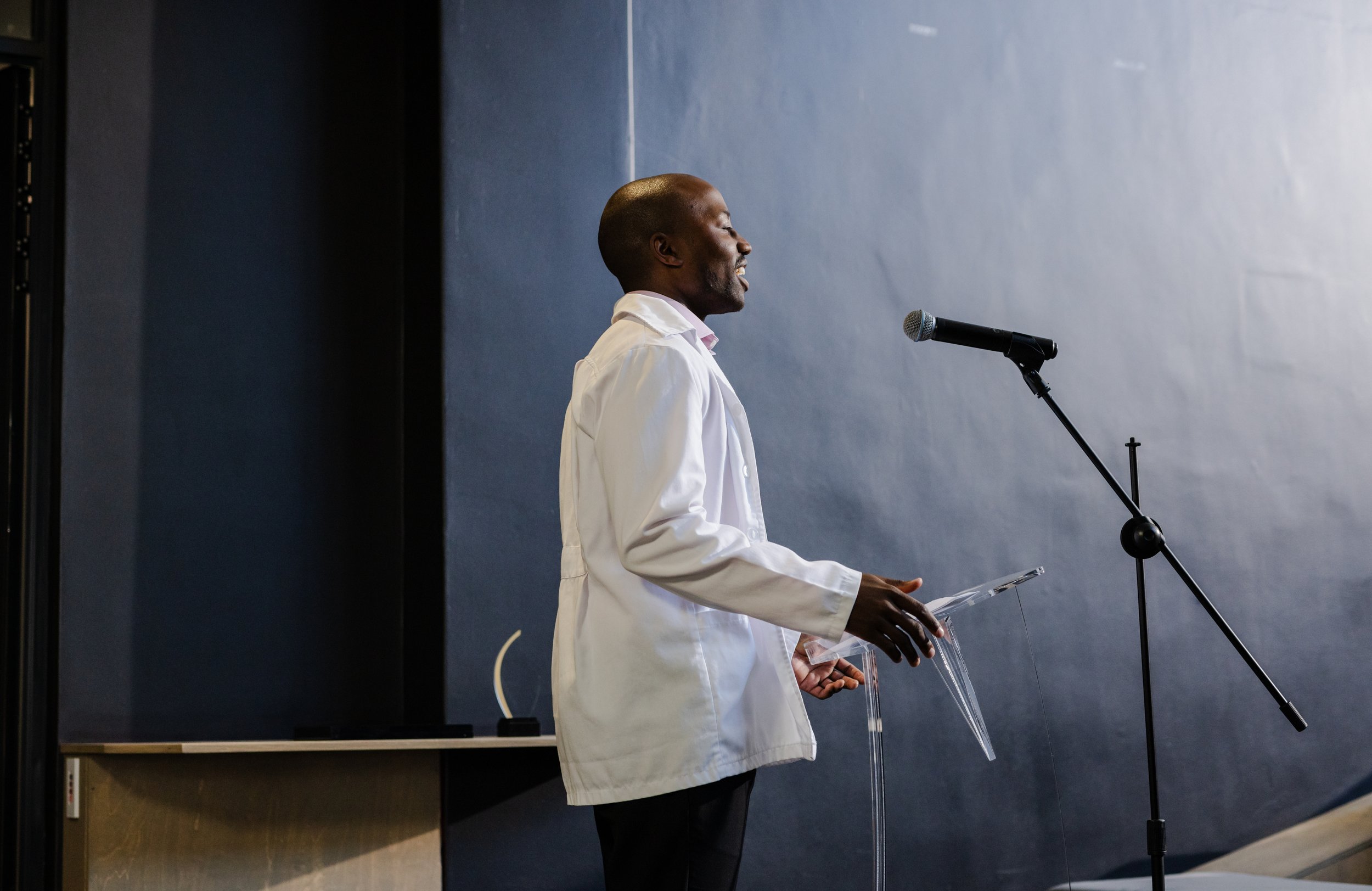
One of the themes to come out of this month has been our relationship with the word ‘poverty’ itself. Many of our Commissioners do not want this word to be part of what we are trying to do as a Commission, citing the stigma that so often comes with it. Depictions of people ‘in poverty’ are frequently degrading and mention nothing of the wisdom and humanity that all our Commissioners have in common. This will be a challenge for us as a Commission, figuring out how we want to define ourselves while emphasising our links to the nationwide Poverty Truth network. But as our Commissioners said, ‘We’re not asking for handouts, we have the knowledge that the Civic Commissioners need.’ When they take to the stage at the launch event in a couple of months’ time, they will be doing so from a place of strength.
Alicia Mason
June 2026
It’s just three months to go now until our launch event, and things are really hotting up. Unfortunately, the heatwave means that we have had to postpone our second PTC group meeting of the month, so we’ll need to reschedule it for another time.
June has not been uneventful, though. We’ve recruited a couple more Community Commissioners, and we’re very excited that the Mayor of Elmbridge has agreed to come on board as a Civic Commissioner. We’re also hoping to recruit representatives from the police, the local Jobcentre, the Council (both Elmbridge Borough Council and the incoming East Surrey Council), and from among Walton Charity’s trustees, to name but a few. It’s gratifying to hear influential local people who have many demands on their time say that they are keen to be involved, and I know that our Community Commissioners are happy about that too. This is how they will make their voices heard.
We’ve also settled on our venue for the launch event, and I’ll announce that in next month’s entry once the hire fees have been finalised. I’m very curious to see how our launch event will compare with others that I’ve seen. We certainly want to make something of the maze idea I mentioned in the previous entry, because it’s such a powerful image to convey what it’s like when you’re going through a difficult time. We’ve been using it to go a little more deeply into our Commissioners’ experiences, asking them to share a bit more about times where they’ve felt lost in the maze. People have opened up about things that they hadn’t talked about before, and you can feel the camaraderie and supportiveness in the room growing.
We want to find ways of helping our Commissioners share their experiences in an arresting and original way. That’s why we’re also on the lookout for artists, photographers and videographers who might be willing to help our Commissioners create artistic pieces or performances that will get their message across. I can see our Commissioners having a variety of presentation styles. Some will be eager to get up on the stage and make a speech, while others might prefer to share a video, or create some kind of activity that will put people in their shoes. But now that we’re starting to get confirmations from Civic Commissioners, it’s getting easier to visualise who will be in the room on Wednesday 30th September. There’s still so much to do before then, but so much enthusiasm too, and I’m confident that our Commissioners will join with us to plan an event that gets everyone excited for the change we’ll bring about in Elmbridge.
Alicia Mason
May 2026
It’s been another busy month for the Elmbridge PTC, and just like the weather, things are really hotting up.
The local elections took place on 7th May, and now that incoming councillors are in place for the new East Surrey unitary authority, we have a better idea of who to recruit as Civic Commissioners. We are hoping that the local government restructuring provides us with an opportunity to embed the Poverty Truth way of working into the new council right from the start.
After a few months focusing solely on getting to know one another and explore some of the issues people have been dealing with, it’s now time for us to plan the launch event with our Commissioners. There’s an excitement that comes as we move into this new stage, and in a way, relief as well, because it feels like we’re finally moving forward. But for me, there’s also a nervousness, a heightened sense of responsibility and a need to get it right. What would ‘getting it right’ look like? Making sure we come up with a plan for the launch event that all our Commissioners are happy with, that they continue to feel safe and hopeful in expressing themselves, and that they’re able to share their experiences with Civic Commissioners in a way that will get them excited to join us.
I know that not all those things are fully in my control, but I also know that I’m not running the Commission alone. That point was powerfully brought home to me when Tom and I attended the Poverty Truth Network Facilitators’ Gathering in Chester. Even more than all the helpful advice and reflections we received, what I took away from that event was the feeling of being in a likeminded community. Co-Director Andrew made the point that we spend a large percentage of our working hours explaining to people what a Poverty Truth Commission is, and so it made a welcome change to be among people who know exactly what a Commission is and how it works.
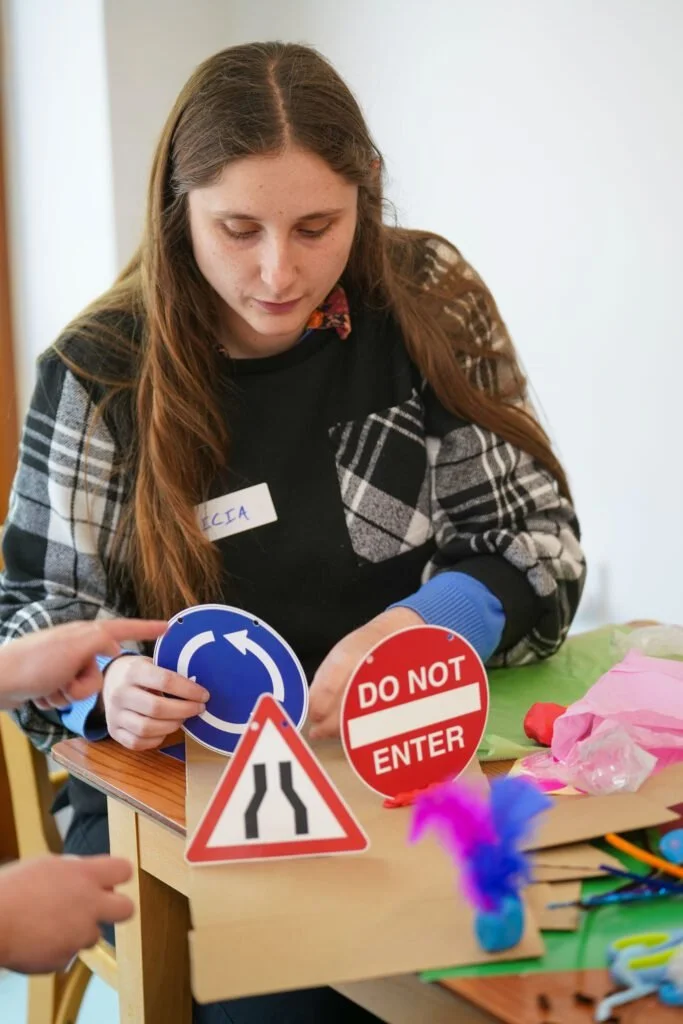
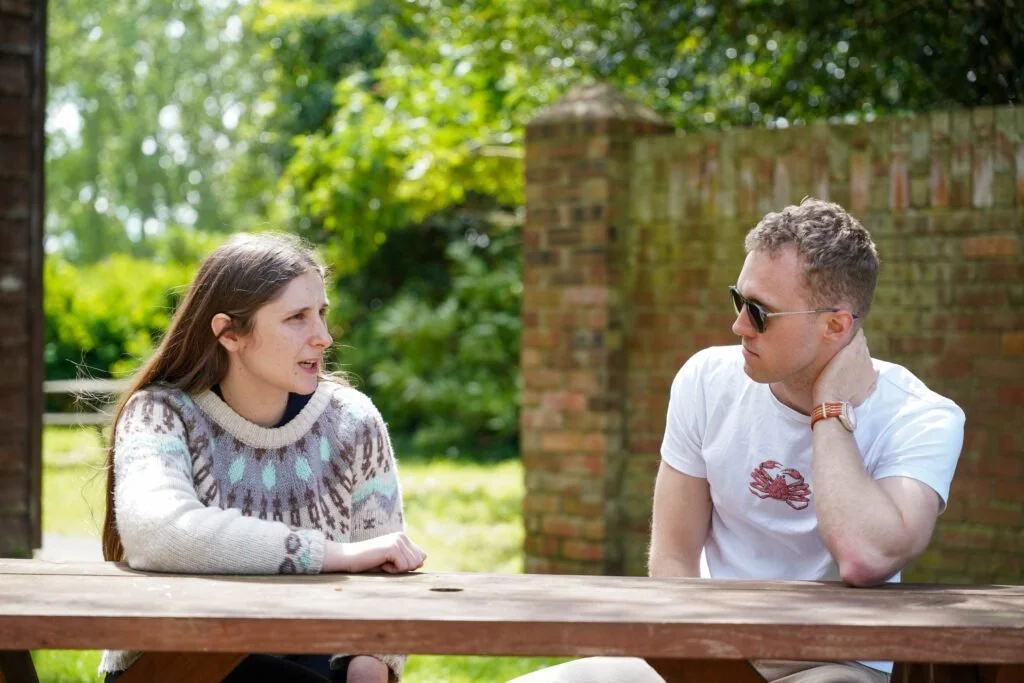
Much like the Commissioners’ Gathering back in October, the camaraderie and hilarity in the room were palpable. It wasn’t long before I had tears of mirth running down my face as we assembled a character out of plasticine and feathers and created a road sign-strewn assault course for him to navigate, to represent the Poverty Truth facilitation journey. Here are a few action photos (credit to photographer Nick Jones), featuring the aforementioned assault course and Tom and me in deep conversation – about what we had for breakfast, if memory serves!
I think we all intuitively know that fun and silliness is a brilliant way of bringing people together, even if it isn’t always the first instinct in a professional setting. I wanted to bring that spirit into our Elmbridge Commission meetings as well. Inspired by an exercise from the Poverty Truth Network, I brought a small ball of silk into one of our meetings and gave everyone a piece. The aim was to gradually unravel each piece of silk so that each tiny bundle became a large network of strands. It turns out that it’s much easier to do this if you work with another person rather than trying to untangle the silk on your own, particularly if you combine your strands to create an even bigger network. It might seem like a bit of a bizarre and pointless exercise, but the idea is to show how far our connections can go. By combining our pieces of silk and working together, we created something much bigger than any of our individual pieces, a network composed of strands that are stronger than steel. It also gets people talking and using their hands, and it’s amazing how easily conversation flows when you’re engaged in a shared activity.
Food is also one of the best ways of bringing people together, I find. When we stopped for lunch at the end of our meeting, all of our Commissioners stayed to eat and chat for a full 45 minutes after we closed the session. It was during these conversations that one Commissioner shared a metaphor that absolutely floored me: ‘When you need help, it’s like you’re in one of those big hedge mazes and you don’t know where you’re going, and you keep running into dead ends. And the people running the services, they’re outside the maze – they’re trying to tell you which way to go, but they can’t see where you are, so they can’t help you and you end up getting more and more lost.’
It’s such a powerful image because it clearly conveys the confusion and helplessness that comes with not knowing where to turn when you need support. But it also doesn’t demonise those working within systems and services – they’re trying to help, but they might not have the clearest picture of what it’s like to be lost in the maze. Working with the Community Commissioners, our job is to invite the Civic Commissioners to join us in the maze and find our way out together, following the trail of our combined strands of silk.
Alicia Mason

April 2026
As the bumblebees bustle and buzz outside, Walton Charity has been a hive of activity. This month we’ve really been focusing on meeting with potential Civic Commissioners and a final push for Community Commissioner recruitment. So far, we have two new people on board, with up to three more potentially still to come, and Elmbridge Borough Council have reiterated their support for the Commission as well.
We’ve also moved the location of our Commission meetings, to Walton Community Centre. We’re in a lovely bright conservatory room with big comfy chairs, which adds to the relaxed and friendly feel of our gatherings.
Relaxed and friendly they may be, but our meetings are not without lively discussion. This month has seen tears and disagreements, but there have also been pats on the back, greetings of ‘brother’ and ‘sister’, and the deepening of friendships. Some of our Commissioners have got together with their children outside of our meetings, staying up late into the evening and putting the world to rights together.
It’s starting to become clear what we need to work on in our local area. Getting help is often a big problem. Much of the time, people simply aren’t aware that there’s support out there, because it’s not widely publicised, or it’s publicised in the wrong places. Our Commissioners pointed out that few patients at a doctor’s surgery will spend time perusing the flyers on the noticeboard if they’re feeling sick and stressed, and will likely not want to hang around once they’ve met with their GP. Digital exclusion is also a huge problem for many. According to a Surrey County Council report, 50,000 adults in Surrey are currently offline. Additionally, poor mental health can leave people feeling overwhelmed, and searching for support, the thing they most need, will be the last thing they feel capable of doing.
For those who can access the information, there may still be other obstacles. Perhaps they can’t afford to take part in certain activities, or can’t easily reach some venues by public transport. Certain issues can be doubly troublesome when you’re struggling to pay the bills: perhaps you have just enough for your rent this month, but then you burst your car tyre driving over one of the many potholes in this area, and you don’t have the money to pay for a new tyre.
There’s a double problem with accessing support here: first of all, finding out that the support exists to begin with, and then reaching or paying for that support. Then there may be still others who know about the support and could conceivably access it, but choose not to out of shame. It’s never nice when you feel like you can no longer manage your life yourself and things are out of control, and in a country where ‘scroungers’ is still something of a media buzzword, many are discouraged from getting help until their situation becomes truly desperate. This means it will likely take more time, more resources, for them to get back on their feet than if the support had been there earlier. This in turn has a knock-on effect because there are fewer resources left to go around, meaning that others must wait longer for support and then they, too, get into serious difficulties, creating a vicious cycle.
What can we do about it? How do we balance long-term thinking with helping those who need support right now? How do we make people aware of what help is out there and remove the practical and psychological barriers to accessing it?
It helps if you know your local area very well, and that’s what we’ve been working on with our Commissioners. Tom painstakingly created puzzles in the shape of Elmbridge borough, cutting out every ward individually, so that our Commissioners could then piece them together and get to know the area better. Here’s the map with all the main towns in Elmbridge labelled. Each individual piece represents a ward – can you name them all?
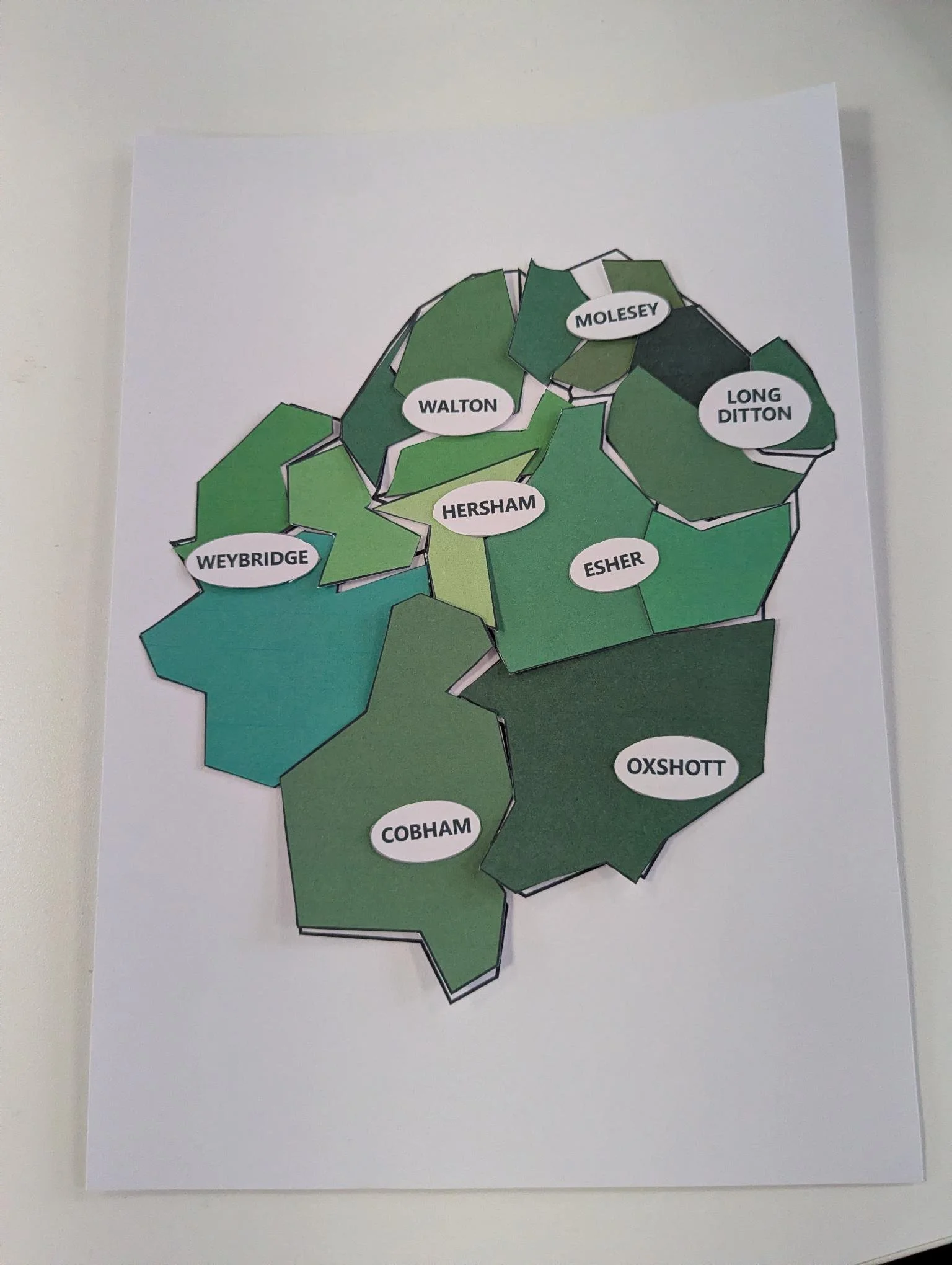
It was a useful exercise for all of us because many of us have been to Weybridge or Cobham or Esher dozens of times, but never really thought about where they are relative to each other and how it all fits together on the map.
I feel like I’m piecing together my map of the UK as well, as we took another trip this month. This time, we made our way to Hull, for the launch of their second PTC. It was extremely interesting to compare this with Durham’s launch event, which we went to last month. Durham focused heavily on the Community Commissioners’ hard-hitting personal stories, with each Commissioner taking a few minutes to stand up on stage and share their experiences through videos, poems and artwork that they’d prepared. In Hull, by contrast, the Commissioners were sat on tables with us, and each of them took it in turns to say a sentence or two as part of a larger script that they’d rehearsed together. Rather than getting up on stage, they spoke from their tables, so the presentation bounced around the room. We were then involved in a ‘River of Life’ exercise, which involved mapping out the key moments that had shaped our own lives, both positive and negative (‘the ebbs and flows’), and talking through these with others on our table. This exercise showed that everyone has a story, something difficult that they’ve been dealing with, and that we need systems and services that are prepared to work with people who have faced trauma. The emphasis throughout the event was on ‘Stubborn Hope’, one of the mottos of the Poverty Truth Network, and the need to recognise what we have in common and work together.
It is a difficult balance to strike between not shying away from the painful realities of what our Commissioners have been through, and not leaving people feeling discouraged and hopeless about our attempts to make things better. As we get further into the summer, we’ll be starting to plan our own launch event, which is now set for 30th September. We’ll work with the Commissioners to figure out what they want to say and how they want to say it.
I can feel how keenly our Commissioners are raring to go. They want to be actively working to fix things right now. It does feel difficult to go slowly when a new report has found that 20,000 children in Surrey are currently growing up in poverty. Behind that statistic are 20,000 young minds who are facing the stress of not being able to keep up with their peers, who perhaps can’t enjoy the everyday treats many of us take for granted, who may even be missing meals.
Though we would like for our Commission to solve all these problems, we know that we can only achieve so much. What our Commissioners can do is talk about the issues that they’ve experienced, listen to one another and understand those issues. We know that being part of a Commission can be transformative for those involved, who find friends, greater confidence in their own voice, and maybe even work related to the PTC’s aims. Civic Commissioners experience a new way of working focused on relationships, and take this with them into their organisations. Our hope is that this will create a ripple effect, as more and more people come to learn about the Poverty Truth ethos. As our Commissioners have said, even if their work helps only one person, it’s still worth doing. With a dozen or so Community Commissioners and the same number of Civic Commissioners in a PTC, that’s already a lot more than one.

Alicia Mason
March 2026
We’ve been on the road again, this time all the way to Durham, as Caroline and I took the train up from London to attend Stanley and Consett’s Poverty Truth Commission Launch Event, hosted by Durham Community Action. The fact that the Poverty Truth Network is now nationwide means that we have the chance to visit places we might not have been to before. I had never visited Durham until now, and I was glad of Caroline’s sense of direction as we wended our way around her old university stomping grounds. I found myself slightly disorientated, as every direction seemed to lead towards the river. Still, the 1000-year-old Cathedral, majestically crowning the top of the hill, was hard to miss. We arrived just as Evensong was beginning, and were treated to an atmospheric chorus that echoed off the stained-glass windows. It reminded me that many voices combined into one can fill a space and warm the heart.
But they can also bring home difficult truths, as the Launch Event proved. Every Community Commissioner who shared their story had had an experience of not being believed or else being written off as beyond all help by organisations who were supposed to support them.“There’s nothing we can do for you – you’ll probably die by suicide.”
That was the response given to one Community Commissioner who had sought help for her mental health struggles. She needed a listening, compassionate ear, and was instead met with labels: ‘difficult’, ‘attention-seeking’, ‘mentally unstable’. Labels covering up a system that could not cope with the pain the Commissioner faced on a daily basis.
There was plenty of anger, sadness and shock in the room, expressed through the sharp intakes of breath that greeted stories like this one. But we were also blown away by the artistry with which the Commissioners expressed themselves, in their drawings, in their videos, in their poetry and spoken-word performances. The villages of Stanley and Consett have no shortage of talent. Seeing just how brilliant the Commissioners were and how they supported each other throughout the event also instilled a sense of hope, with their PTC now about to unfold.
Nowhere was this hope more visible than in the members of the local youth club, who are involved in a Youth Commission running alongside the main PTC. One young man spoke about the difficulties he’d faced and his pride at building a good life for himself. The local community of young people was especially important to him. “If it weren’t for that youth club, I’d either be in juvie or dead,” he said. “I really hope they continue to get funding, because if they don’t, what happens to the next me?”
Caroline and I left with tears in our eyes and a whole lot of questions about our own Launch Event. The Community Commissioners in Durham had spent around six months preparing for their Launch, including several sessions with local artists and poets to craft the messages they wanted to share. At this stage, our Community Commissioners had only met each other twice as a group, and we had been planning on holding our Launch Event in June, which would only give us three months to prepare. After witnessing the strong bonds between Durham’s Commissioners and the scale of their event, we decided to plan our own event for September instead. True to the spirit of Poverty Truth, we wanted to give our Community Commissioners enough time to feel comfortable with one another and think carefully about how they wanted to share their experiences with the Civic Commissioners. Our current plan is to continue building that space of trust over the course of our next few meetings, and then turn our attention towards planning our Launch Event more seriously as summer approaches.
There are signs that that trust is already growing. We’ve had two more group Commission meetings in March, and our Commissioners are already a good deal more relaxed and open with each other. A highlight for me was watching two Commissioners from very different backgrounds bond over their housing difficulties and their hopes and fears for their teenage children. “Thank you for sharing your experience with me,” one of them said, as the other bowed his head in acknowledgement. This was a powerful appreciation of the courage it takes for our Commissioners to show up to these gatherings and talk about what they’ve been dealing with.
Such conversations can only happen through genuine listening. This is something we’ve focused on throughout our sessions so far, listening to understand rather than waiting for a moment to jump in and share our point of view. So often when someone shares that they’re going through a hard time, the temptation is to spring into action, offering advice and trying to fix things. That’s particularly true if we think there’s a concrete way in which we can help out. But much of the time, what someone truly needs is to be heard, to feel understood, to be accompanied (though not necessarily helped) through whatever it is they’re facing.
We want to make our Commission meetings a space where that can happen. Here are some of our Commissioners’ thoughts on how we can act in a way that makes everyone feel safe, heard and respected, and how we can support each other if things go wrong:
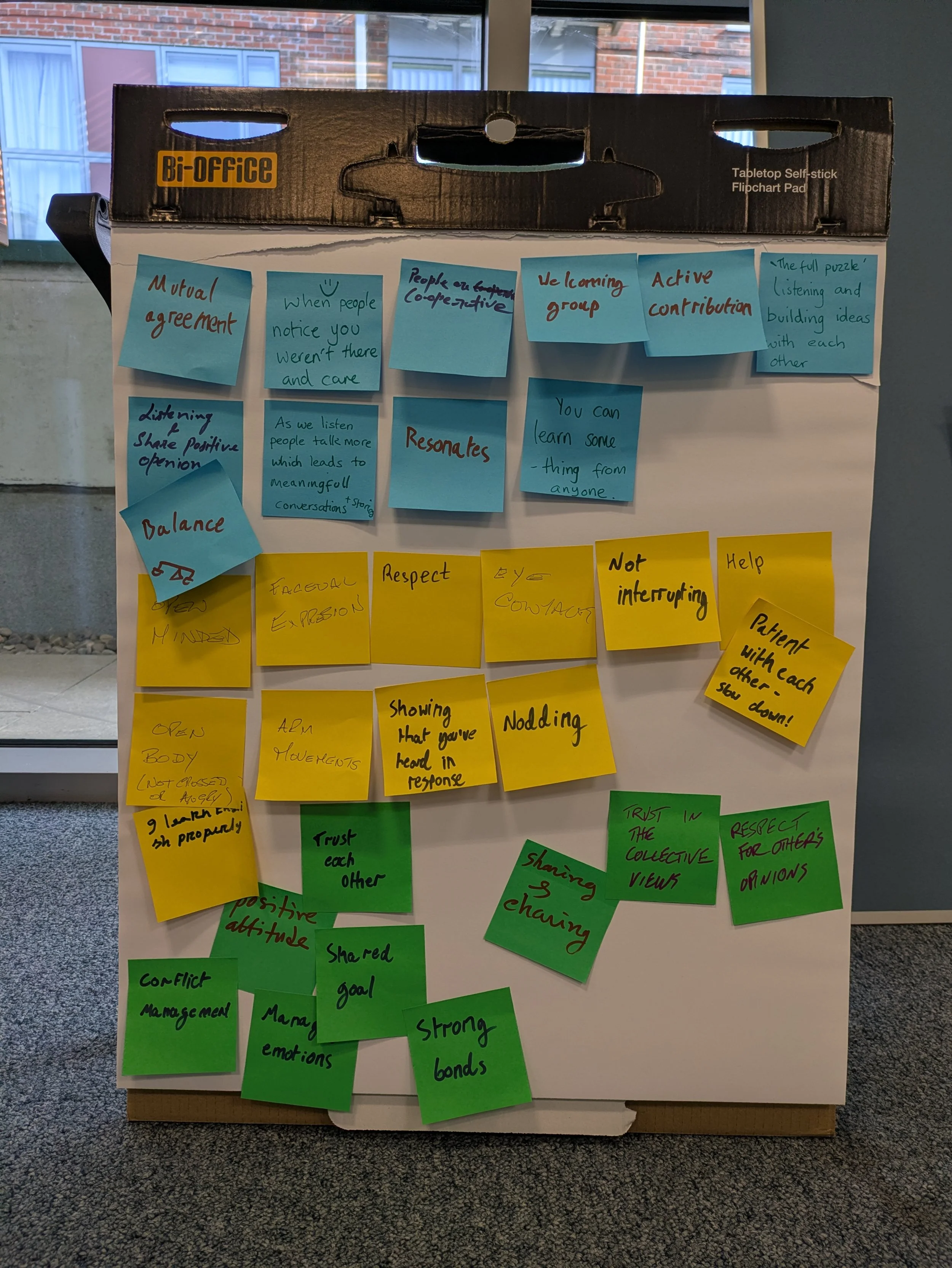
We’ve combined these ideas into a single document, which we’ll continue developing as more Commissioners join the group and add their thoughts about what makes a safe and brave space.
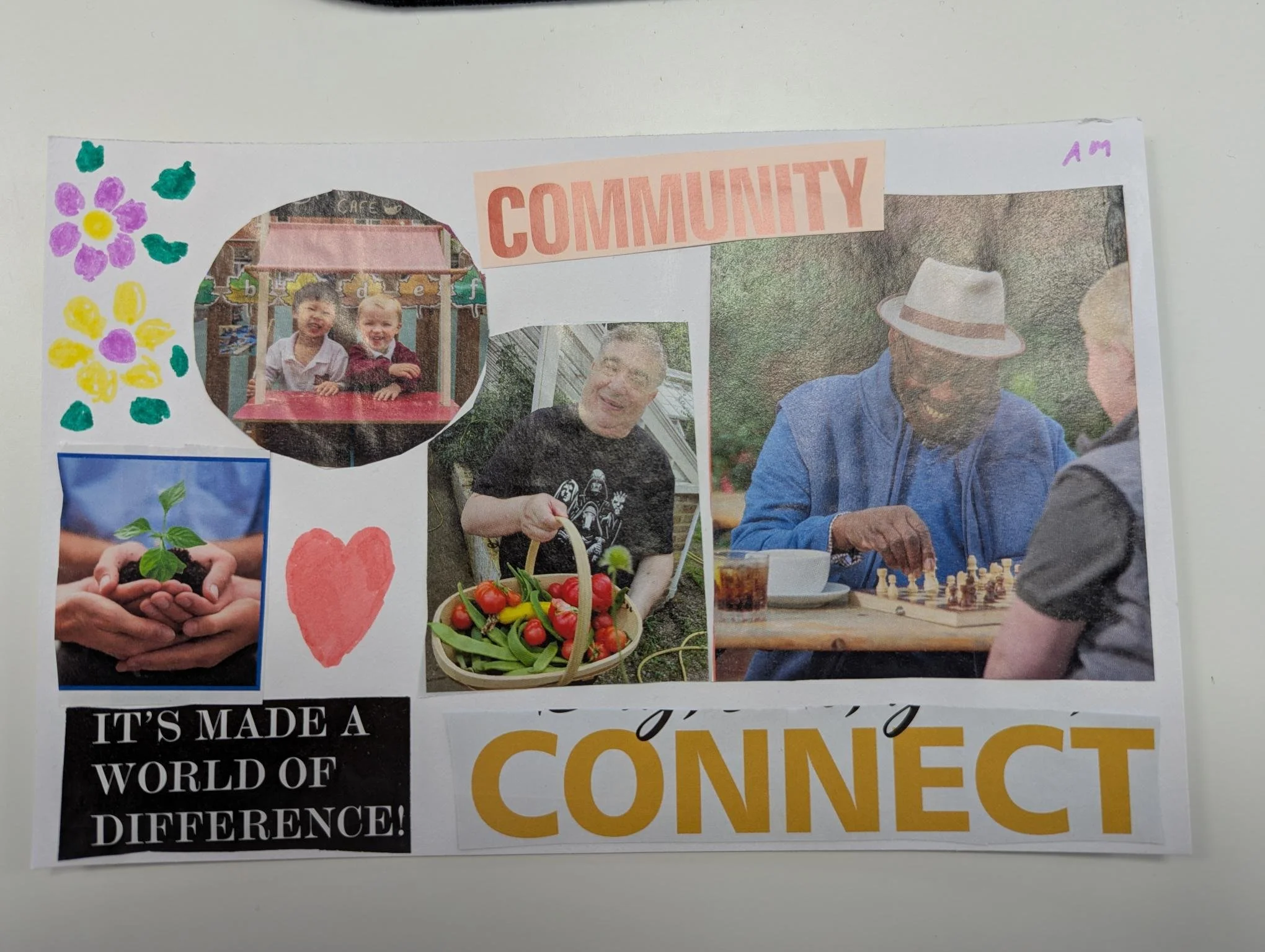
We’ve also started charting the changes that we’d like to see in Elmbridge. Keeping the creative spirit of the Durham PTC launch alive, we created drawings and collages that captured our hopes for the Commission. Here are some of the things we’d like to improve and the results we’d like to see:
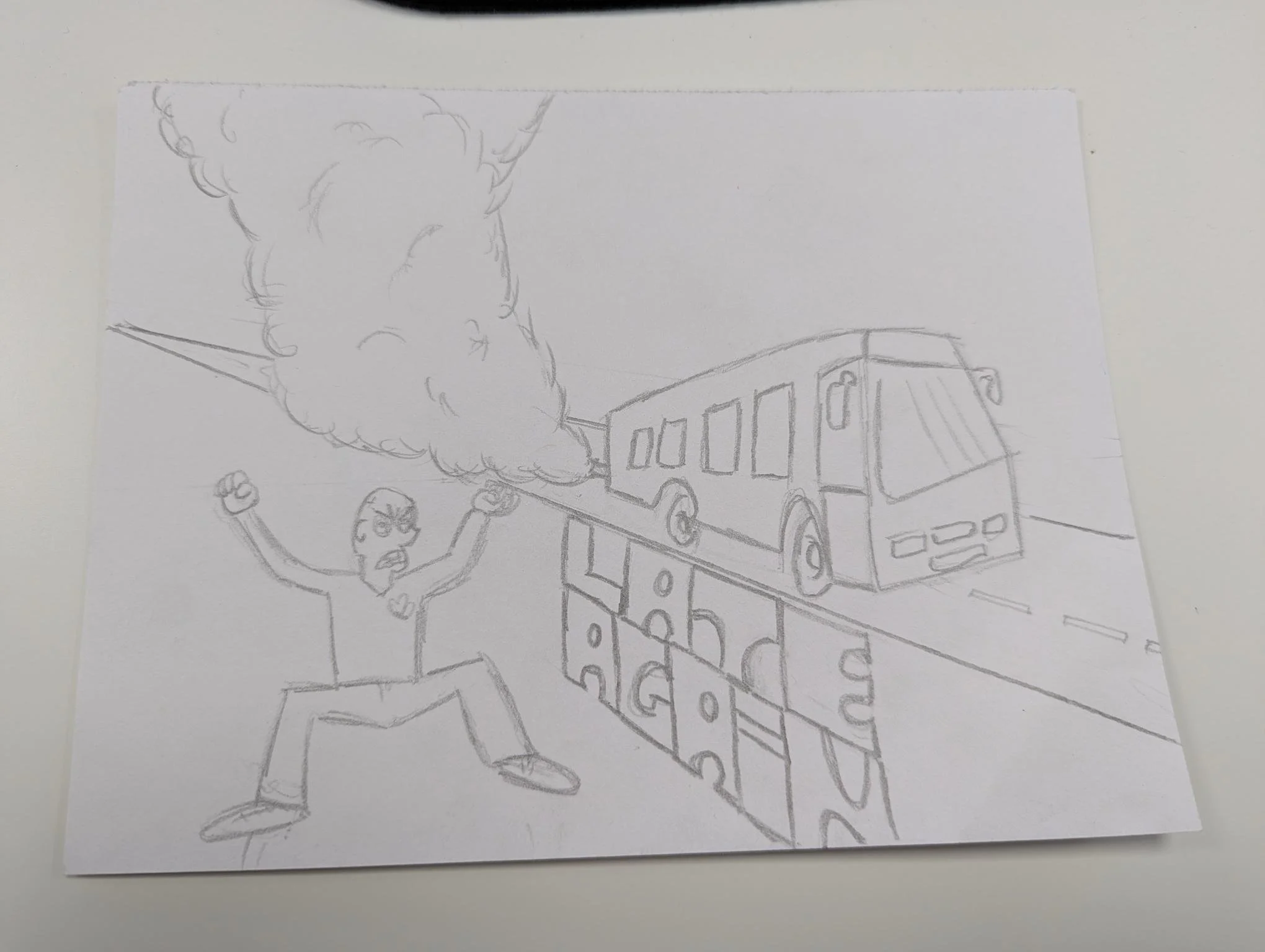
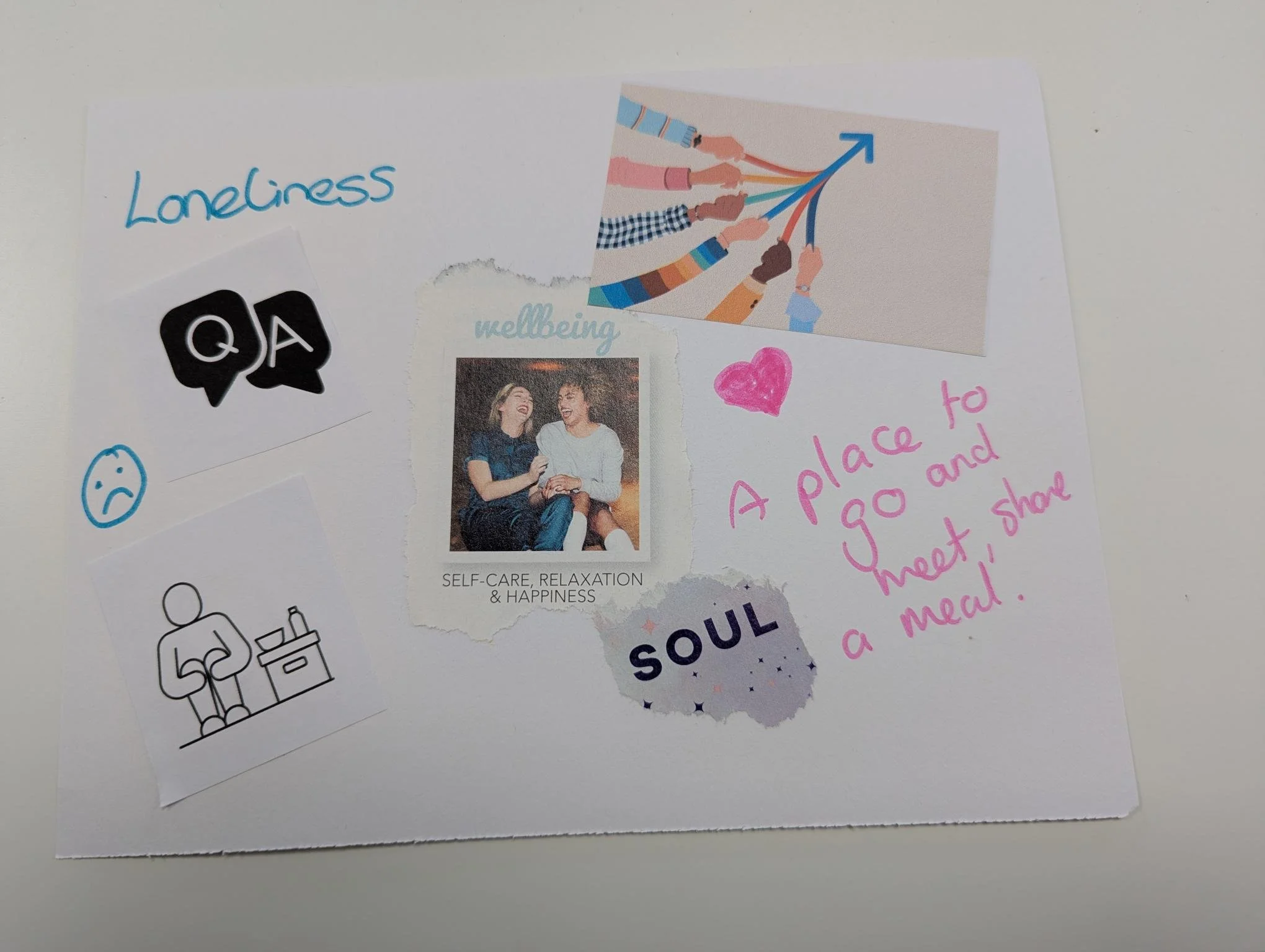
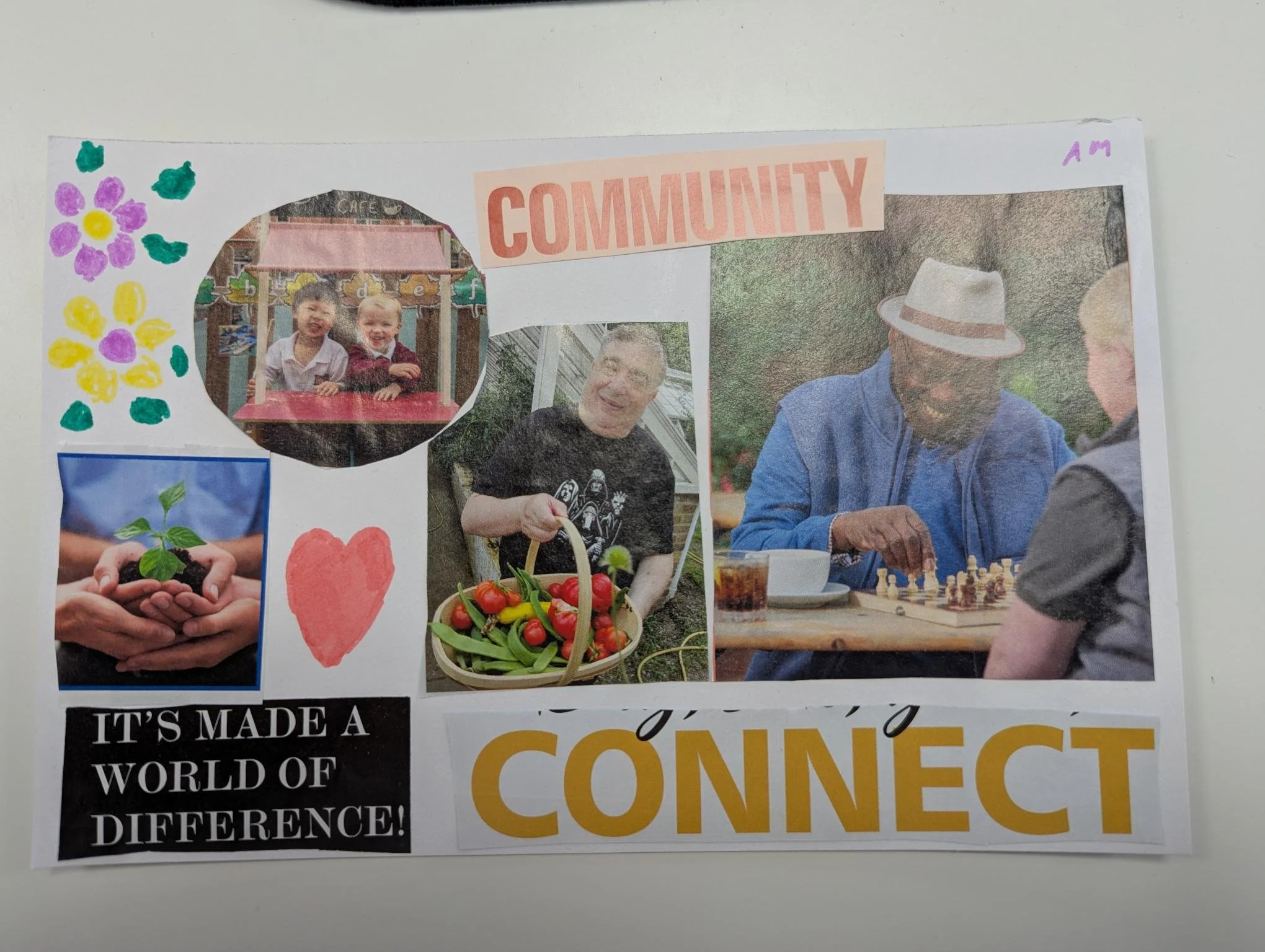
Seeing what everyone came up with reinforced my impression that connection will be a key theme for our Commission: improving public transport links, creating meeting places and community hubs, and coming together to look after each other as well as the plants and animals who share this area with us.
There are always more connections to be made. In April, we’re hoping to recruit just a few more Community Commissioners, and we’ll also start testing the waters with potential Civic Commissioners. It’ll be time to firm up the date and venue for our Launch Event too. September may still feel like a while away, but I’ve been working on the PTC since the end of last September, and if the last six months have been anything to go by, the next six months will pass very quickly. It won’t be long before we see our Community Commissioners share their wisdom with the world, many voices combined into one. Now that the clocks have gone forward, I’m waking up with the dawn chorus, aware that our chorus, too, is dawning.
Alicia Mason
February 2026
We have packed a lot into the shortest month of the year. In the first week of February, we wended our way through the flooded streets of Esher to pay a visit to Christians Against Poverty (CAP), who provide financial advice and assist those struggling with debt or having trouble navigating the benefits system. More and more working families are turning to them for help as rent and bills in Elmbridge grow ever steeper. Charities and local government are struggling to keep up: a member of another organisation told us that he had had to pay for repairs to clients’ properties out of his own pocket.
Why are things going so wrong for so many people? This is something I am hoping our Commission will explore.
At 10:30 on 11th February, the frantic dash to set up chairs, flipcharts, projectors, tea, coffee, biscuits, Post-It notes, and sticky labels had ceased, and my colleagues, Tom, Lisa and Caroline, and I now faced a nervous wait for our Commissioners to arrive for our very first group meeting. Most of them had never met before, and with such a diverse group, we were unsure how they would all get on. But from the first tentative knock on the door, we were surprised at how well everyone gelled together. There were moments of shyness, and questions about whether we would really, truly be listened to in our attempts to bring about lasting change, but there was also laughter, good-humoured teasing, exchanging of phone numbers, and a deep sense of purpose and hope.
So many of the issues our Commissioners described, it seemed to me, came down to a lack of connection. Not knowing where to turn and being passed from pillar to post when trying to access support. Feeling like there was no-one they could rely on to be there for them. Trying to get help from people with whom they had no pre-existing relationship. Being handed leaflet after leaflet instead of having someone take the time to sit down with them, listen to them, and understand what they needed.
If we succeed in creating more connections within our community, most especially between those who use services and those who design them, but also by bringing people together in general, perhaps we and our neighbours will feel more supported when it is our turn to lean on others.
These themes only deepened in our second meeting, as one of our Commissioners spoke about how she is now in a much better place mentally than she was a few months ago, because being involved in this project has meant that she has had the opportunity to talk about her experiences and be heard. Before, she was used to managing everything on her own and simply doing what had to be done, but when she heard herself share the stress and anxiety she was dealing with, she could no longer deny the toll things were taking on her. That gave her permission to feel what needed to be felt.
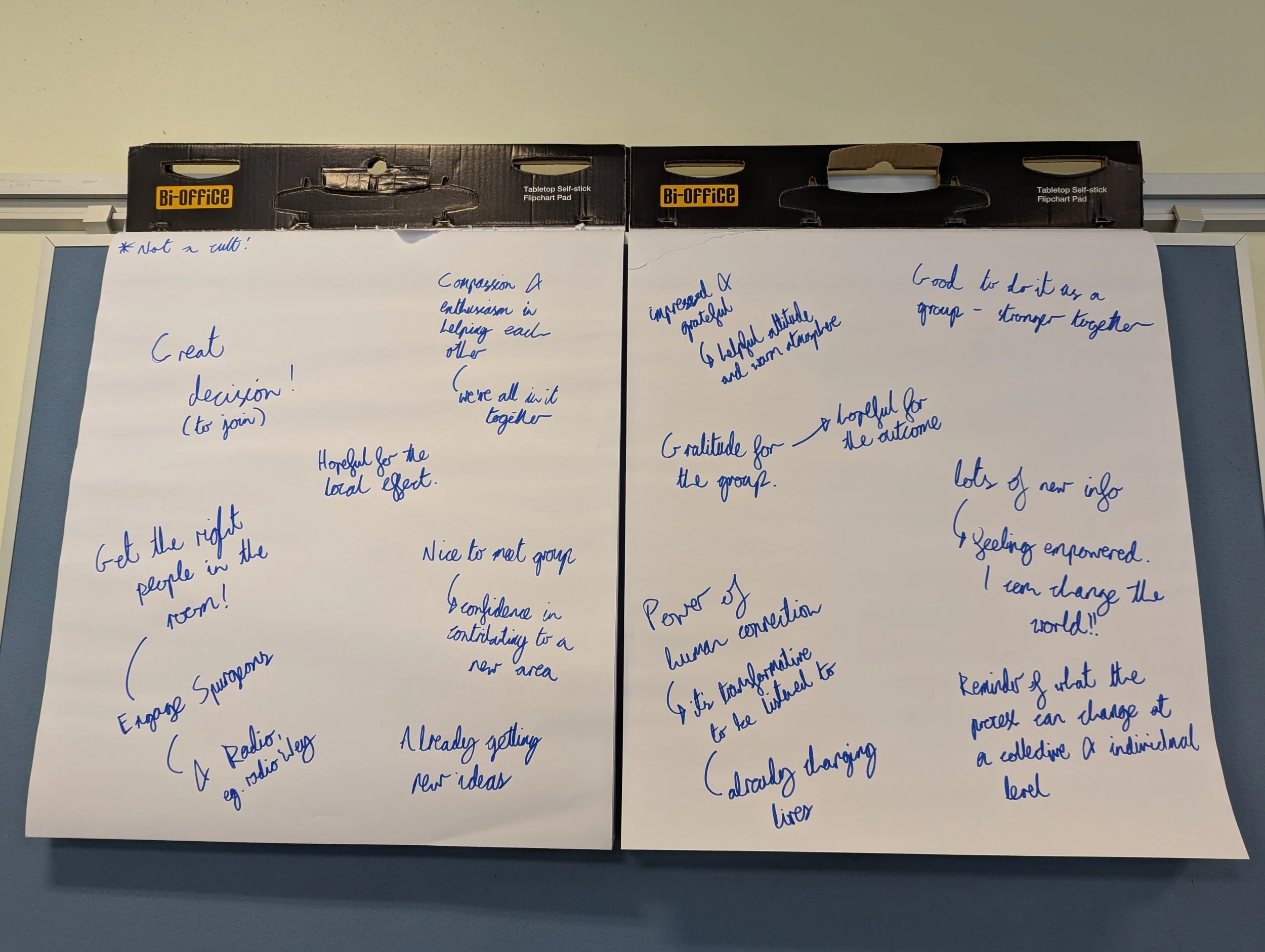
For me, it was very profound to think that our project may already be changing lives for the better, before we’ve even so much as brought in all our Commissioners. We were given a vision of how the future could be brighter still when Yssy, a Community Commissioner from East Surrey’s Commission, kindly paid us a visit to share her experiences of being involved in the process from beginning to end. “You can’t fix everything,” she said, “but other Commissioners, both Community and Civic, will pick up on your energy and desire to make a difference for local people, and they’ll respond in kind.”
It’s clear that the project has been transformative for her. She’s spoken to the boards of mental health charities, Elmbridge Borough Council Cost-of-Living Steering Group, and MPs in Westminster, has met her best friends through the Commission, and the confidence and enthusiasm with which she addressed us, a room full of strangers, was infectious. I’m so glad that she was able to come, and as this picture of what we all took away from her words shows, I wasn’t the only one.
As a facilitator, I feel a real responsibility to keep this momentum going. I want to make sure that our Commissioners stay engaged, and that our space is a safe and supportive one, where everyone contributes, but no-one dominates. I know that I will sometimes get things wrong, which is a scary thought when I’ve already seen just how powerful this project can be, and therefore how important it is to get things right. March promises to be at least as busy as February, as Caroline and I will be attending the launch event of the Durham Poverty Truth Commission, we have two more Commission gatherings, we’re still trying to find just a few more Community Commissioners, and we’ll need to start making serious inroads into recruiting Civic Commissioners now as well. There is a lot to think about.
First and foremost, though, I know that my role is to listen, not to take centre stage. This is the Commissioners’ project, their voices. I want to listen well to those voices. I find myself coming back to Yssy’s words: I can’t fix everything, but hopefully the Commissioners will pick up on my energy and desire to make a difference for local people, and they’ll respond in kind.
Alicia Mason
January 2026
The year got off to rather a chilly start, with temperatures falling to -7 degrees on the coldest days here in Walton. Now there is a whisper of spring in the air, with the hardiest daffodils already beginning to raise their lovely heads.
So it is that we are sowing the seeds for our first group meeting with our Community Commissioners, scheduled to take place in the middle of February. One more Commissioner has joined our ranks these month, and I’m also excited to have our colleague, Lisa, on board, providing pastoral support to our group members. She’s been living and working in the area for a number of years, and her knowledge of all things Elmbridge, from which organisations we should contact next, to how often the buses come (or don’t come), is proving invaluable for planning our Commission.
But things don’t always go to plan. Between the school pick-up, urgent work responsibilities and aching backs, our Commissioners have a lot on their plate, and sometimes our well-laid arrangements for meetups can end up falling through. In one particularly hectic week, we had arranged four different check-in meetings with individual Commissioners, but in the end, only one could go ahead. Rearranged or cancelled plans can be frustrating for everyone, but they’re also emblematic of how uncertain life can be when you don’t have a financial nest egg or a support network of friends and family close by.
This will be one of the key challenges of our PTC, supporting those who want to be a part of it to stay involved by working around their schedules, while also keeping the when and where of our meetings as consistent as we can. All we can do is keep learning as we go through the project, and in that, I want to learn from other groups who’ve taken a similar approach. Tom and I shared lunch with the wonderful ladies at Kingston Women’s Hub Survivors’ Forum, and heard from them how much it meant to be in a space with others who would ‘get’ them. No stigma, no judgement, just supporting each other, translating what they had experienced into positive action that could give other women their voices back. It was a privilege to be in the room with them.
On my other travels this month, I’ve been to The Bridge, Mole Valley Employment Hub, Weybridge Foodbank, St John’s Church Community Café, and The Eikon Charity. I want to make good on my promise to get out into the community. We still need more Community Commissioners, especially those aged under 30 or over 70, and people from further afield in the borough than Walton and Hersham. The only way to meet people is to meet people.
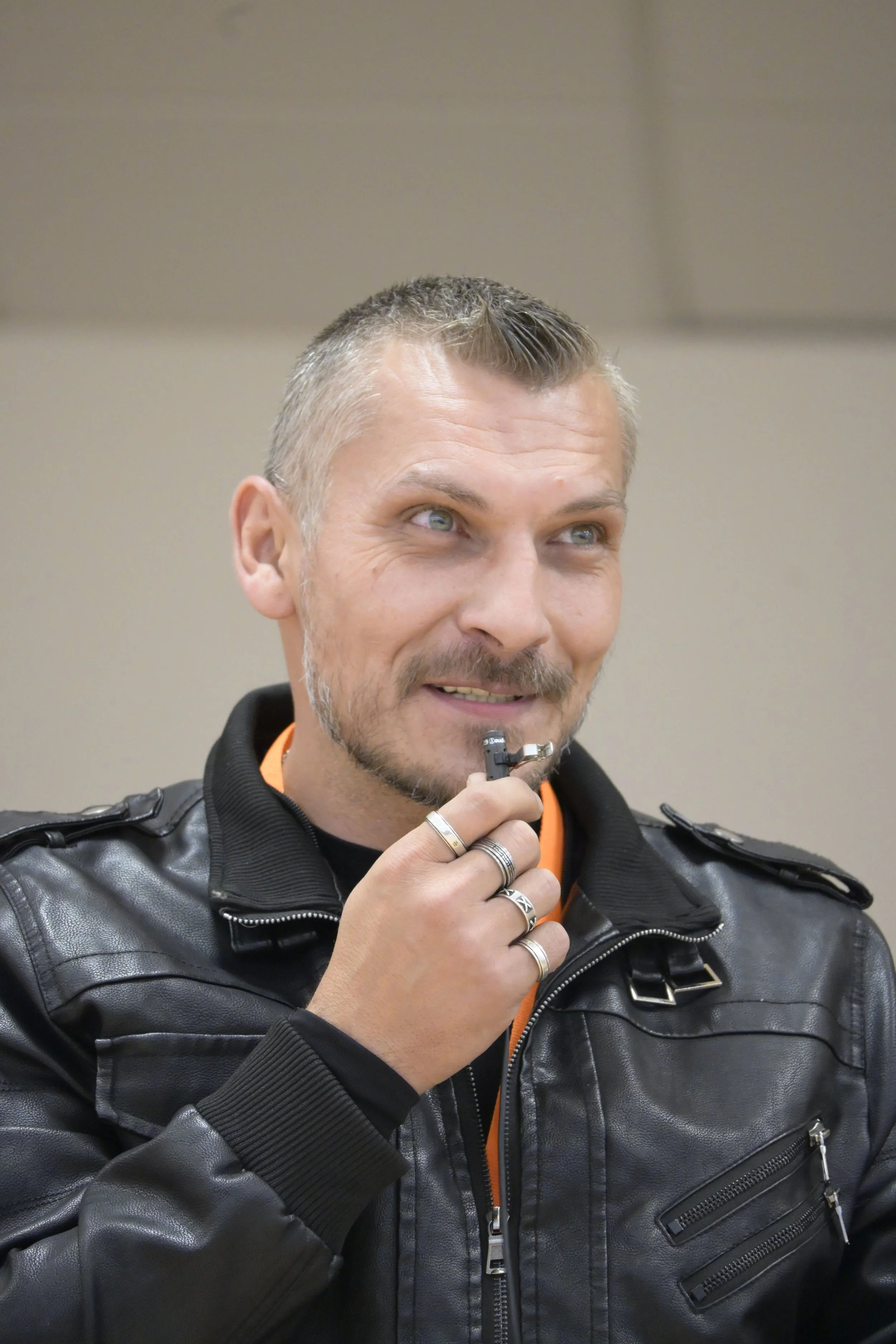
But it’s also important to nourish our existing connections. Romeo is a passionate Community Commissioner from the Suffolk PTC, whom we met at the Commissioners’ Gathering back in October. He kindly agreed that we could use his photo in the redesign of our PTC leaflet, and he posted the finished design on the Facebook and Instagram pages of the Ipswich Romanian Community, of which he is the CEO and founder. With his help, we were able to spread the word about Poverty Truth.
Our seeds are sown, and they are beginning to take root.
Alicia Mason
December 2025
We’re now into double figures – ten Community Commissioners on board, with that number set to grow in the New Year. Ours is a truly eclectic group, with Community Commissioners hailing from all over the world.
Yet even as more people join our group, there’s been a sense of gently winding down as 2025 comes to an end, of taking a moment to breathe before things really get going in 2026.
I’ve been using that time to reflect on the kinds of conversations we’re likely to have once our meetings are up and running. Some may choose to recount some of the darkest times in their lives, or may still be living them – how can we truly be there for them in those moments? Our Commissioners have a wealth of different experiences, and so will likely come at these issues from very different perspectives. Some have moved here voluntarily from another country, some have been forced to move here, while others were born and raised in the UK. How will we make sure that everyone is included and feels able to participate?
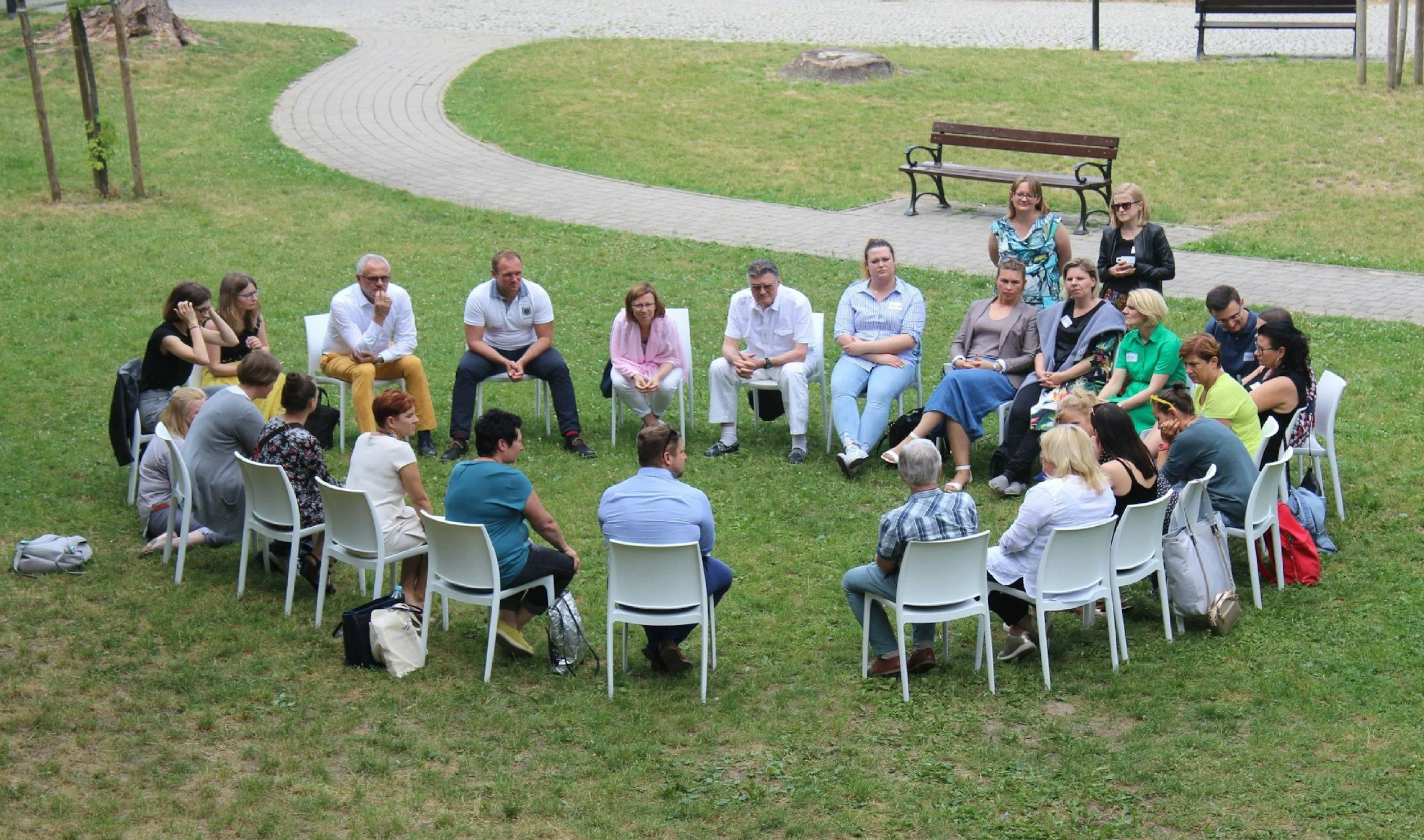
I don’t have the answers to these questions right now, but looking ahead to the New Year, I’m keen to put relationships first. I will make a point of regularly visiting the same community spaces, like The Bridge, foodbanks in Walton, Hersham and Weybridge, the Kingston Survivors’ Forum, the Elmbridge Women’s Hub, coffee mornings at Fenner and Mayfield House, and community breakfasts. If I meet the same people in the same place multiple times, it’ll allow familiarity and trust to develop, and that’s when good things start to happen. That’s especially true when the alternative is to jump right in, sales-pitch style, and immediately start talking about the project with someone who doesn’t know me from Adam and is probably quite eager to grab their food parcel or free meal and then leave.
The slower approach takes more time, but luckily, that way of working is built into the PTC. In the long run, it will surely pay dividends. In the words of Nigerian philosopher Bayo Akomolafe: ‘the times are urgent; so slow down.’
Alicia Mason
November 2025
Three has become seven, with an eighth still to come. Slowly but surely, our Commission is growing. We’ve heard from Commissioners who are fascinated by history and politics, who love to cycle, who’ve lived in multiple continents, who are tired of trying to decipher systems that remain stubbornly, obtusely opaque and impersonal.
“It’s like trying to play chess, and you think you’ve figured out a response to all of your opponent’s moves, and then they go and set the board on fire.”
Right now, the difficult part is remembering to go slowly. Some of our Commissioners come to our catch-ups armed with pen and paper, ready to take notes, plan, research, think, fix. How do we keep up their enthusiasm while reminding them that we’re not going to be solving any problems just yet?
This week, a co-facilitator with the Peterborough PTC shared his insights into the process, and he was quite clear that the best thing to come out of the Commission has been the relationships it has nurtured. He described one friendship between a Civic Commissioner who was head of a local housing association, and a Community Commissioner who has experienced homelessness. “Now,” he said, “whenever that Civic Commissioner is designing a new policy within his organisation, he’ll be thinking, ‘How will this affect my friend?’”.
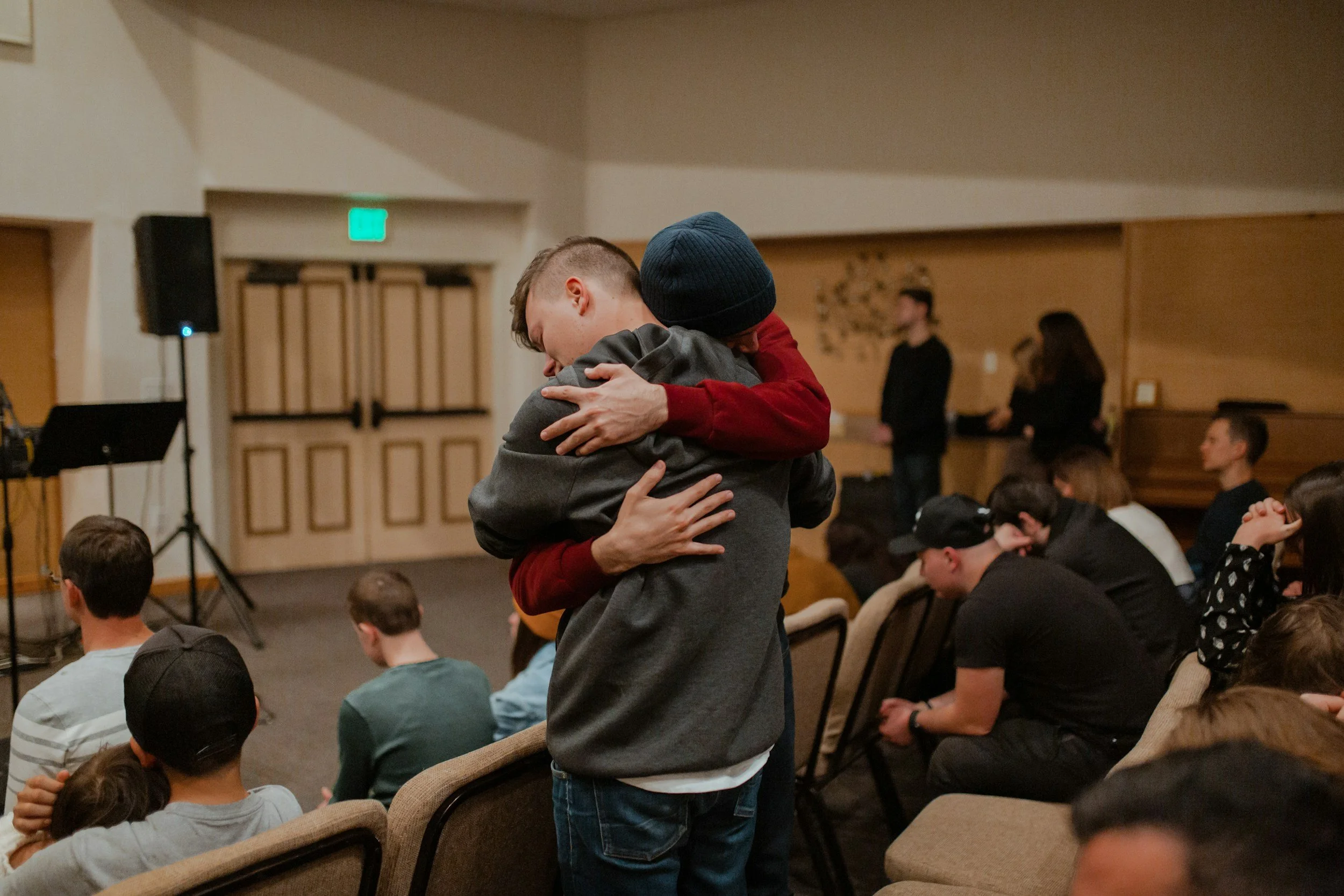
Those human connections, it seems, make all the difference, and that’s why we need to take the time to build them up. You could argue that it shouldn’t have to be this way. Policymakers should think carefully about how their decisions will affect people and care about those in need whether they know them personally or not. But the PTC approach acknowledges the fact that, rightly or wrongly, humans are more likely to bestow their time, energy and resources on those whom they consider to be part of their group, their inner circle.
My hope is that our PTC will create a circle where previously there was none, and that this circle will gradually grow outwards, bringing in more and more people as the impact of our approach makes itself felt. Everyone deserves to be listened to and celebrated. And what’s more, we need to hear from everyone. How else would service providers in Peterborough know that their caller ID coming up as ‘number withheld’ feels stressful and threatening for people who aren’t sure who’s going to be on the end of the phone, and fear that they’re going to be dealing with a scammer or a robot? The seemingly little things that you’d never think of unless you’d personally been through it can make someone’s day that much easier, or else send them into a tailspin.
In recent weeks, I’ve been concerned about how my lack of lived experience of poverty, and therefore relative privilege compared to our Commissioners, could get in the way of trust and open communication. I’m now realising that, assuming our PTC goes well, our Commissioners themselves are in a fortunate position compared to many others in the community, who aren’t able to engage with any kind of support and have no-one listening to their voice. How might we one day reach them?
We want to talk to as many people around the borough as we can. To that end, we’ve been speaking to organisations like Elmbridge CAN, Lower Green Community Centre, Voices of Hope, Oasis, PA Housing, Weybridge Foodbank, and more. We’ve had a lot of enthusiasm from people who say they’ll speak to their client base and help us recruit Community Commissioners. We’ve also faced challenges and doubts – what makes the PTC different from all the other initiatives that have promised change, but in the end haven’t led to very much?
Once again, it’s the relationships we build. This is not an hour-long meeting, a referral, and a wave-you-on-your-way. This is months, years, of cups of coffee and finger food and tears and laughter and marker pens and treasured possessions, and above all, deep listening and belonging.
Alicia Mason
October 2025
We’re already in the thick of it, and yet we’re only just getting started. And I wouldn’t have it any other way.
In the month since I joined Walton Charity, I feel that I’ve already learned more things worth knowing than five years of PhD studies taught me. I’ve met with people who are hungry for change and connection.
That’s what we’re hoping to create with the Elmbridge Poverty Truth Commission, a new participatory approach based on a model that’s been successful nationwide. We want to create a space where people who’ve lived the daily struggle of making ends meet can find their people and their voice. They will decide which local decision-makers from charities, government and business they want to work with, which issues are the most pressing to address, and how to build systems, policies and communities that work for local people.
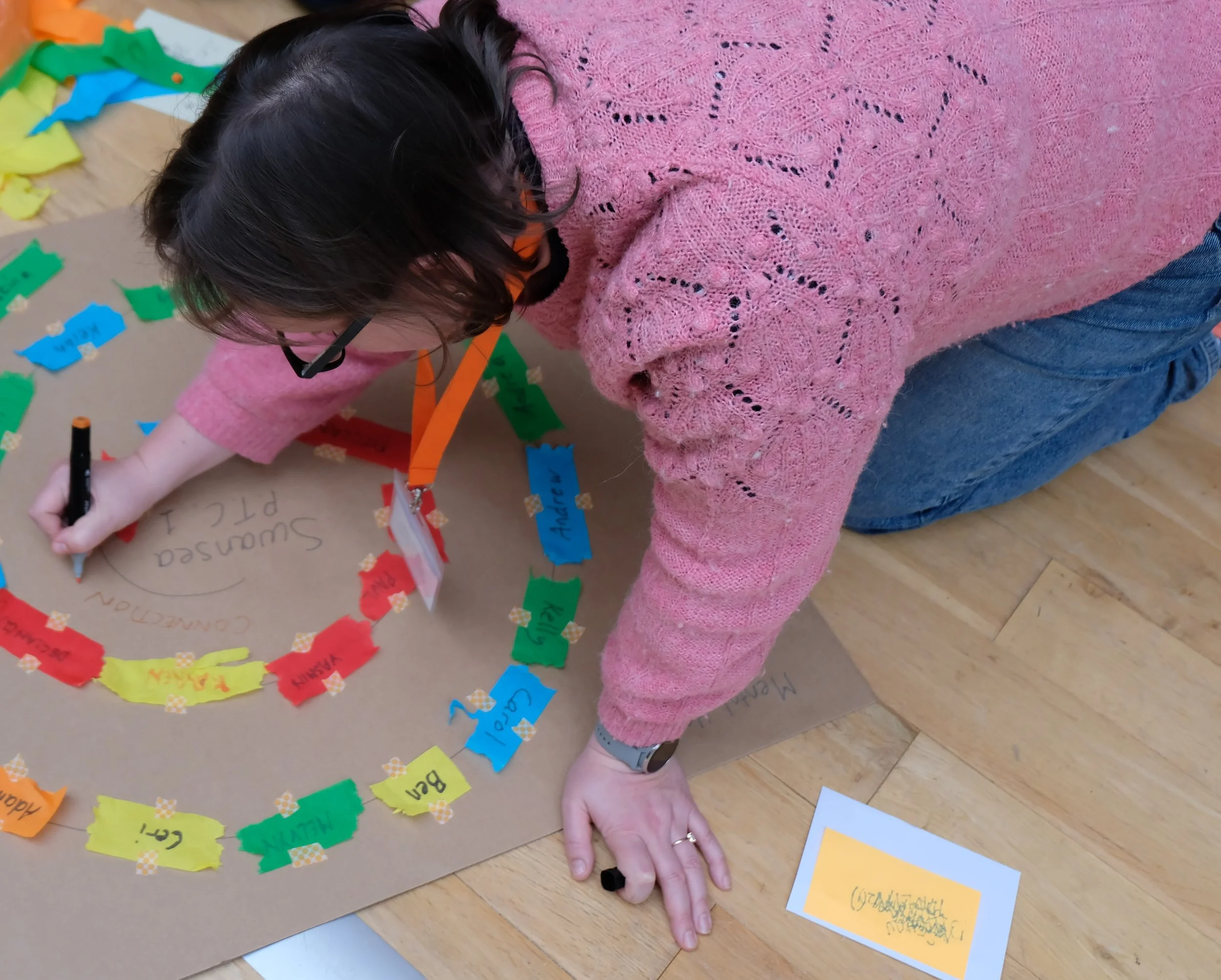
This kind of work requires a lot of stubborn hope. That was the theme of the Commissioners’ Gathering that my colleague and co-facilitator Tom and I attended in Derbyshire earlier this month. The Gathering was a chance for Commissions from all around the country to come together to share their wisdom and to take part in a fun couple of days of workshops that encouraged us to use colour and movement to tell our stories. The voices of Community Commissioners, people who have experienced the reality of not having enough to live on, were placed front and centre. We saw tears in many eyes as our companions spoke of benefits denied, council taxes unpaid, and neurodivergent children forced out of mainstream education.
But between the vibrant silk and streamers littering the floor, conversations with the goats in the next field over, and toe-tapping renditions of Singin’ in the Rain, the joy and hilarity in that place was unmistakeable. The Commissioners hailed from all over the country, from Bournemouth to South Shields, and clearly had differing political views, in many cases, but it was clear to me that every single person in the room belonged to that chosen family and drew great delight from their belonging.
As the Gathering went on, I noticed that one Commissioner had a habit of accompanying rounds of applause with loud cheers. At first it sounded strange, surprising, as he was the only one making noise, but after a while, I couldn’t hear it without smiling. Inspired by the warmth and openness of the other Commissioners, I went up to this man and told him that it made my day to hear him cheer like that.
“That’s what hope is,” he said. “Cheering is hope.”
Even though Tom and I had to rush back from Derbyshire to make it back for the Elmbridge Poverty Truth Forum here in Walton, the timing was fortuitous, as the Gathering had made me all the more eager to share our plans for our own Commission and to hit the ground running.
The Elmbridge PTC is now well underway. We have our first three Community Commissioners already on board, and we’re hoping to meet several more in the weeks to come. Already, it has really hit home to me that poverty can happen to anyone. A few too many setbacks, too close together, can pull anyone under and make it near impossible to come back to the surface.
One question remains for me: how can I, as someone who has never truly felt the sharp end of the cost of living, create a safe space for those who have? Can the Commissioners trust me, and can I trust myself, to understand what it is like to live through trials that I have never yet experienced?
I may never have the deep visceral understanding of someone with lived experience, and I want to be honest with Commissioners about that. But I do have a desire to listen and to learn. I want to help each of our Commissioners find their own chosen family, their own expression of stubborn hope.
I’m so excited to see what the Elmbridge Poverty Truth Commission will bring. Walton and Hersham Foodbank distributed over 5000 food parcels to local people in the past year, nearly half of which went to children. The need is greater than ever, and that is why we must abandon quick fixes and make the effort to build more belonging in our community.