Spotlight Series: 18-30 Wellbeing Support Service
February 2026
*This article mentions suicide and self-harm*
From Crisis to Confidence
Young adulthood should be a time of opportunity, but for many young people across Surrey, it is increasingly shaped by complex challenges such as housing, poor mental health and gaps in support services.
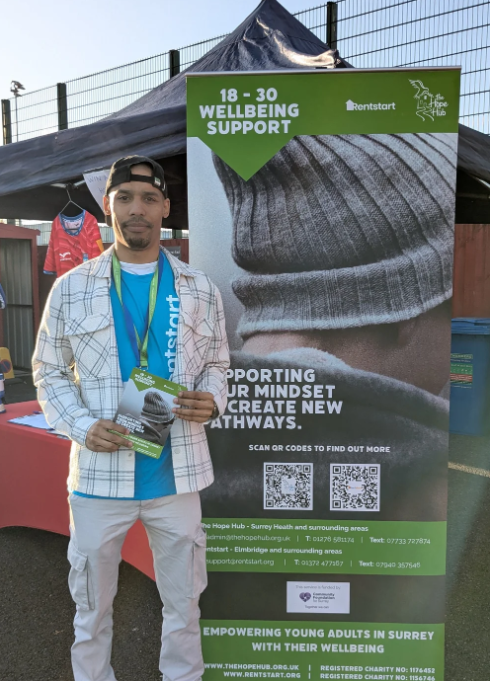
We spoke to Cyrus, 18-30 Wellbeing Support worker, about how their new project works in partnership with other organisations across Surrey to provide intensive one-to-one support for young adults who may have complex needs or be at risk of suicide. We also asked Cyrus about topics that form Walton Charity’s priority areas, including what challenges young people are facing today, and why it’s so vital that lived experience sits at the heart of local services.
What does the 18-30 Wellbeing Support Project do, and who is it for?
“In a nutshell, it provides young people aged 18-30 with a dedicated one-to-one support worker”, Cyrus explains. “It’s open to anyone in that age range across Surrey but you don’t need to be homeless to access the support”.
Funded through the Mental Health Scale Up Fund, the project was developed in response to rising levels of youth suicide, self-harm and increasing pressure on GPs and mental health services in the Surrey area. Cyrus meets young people as often as weekly, helping them navigate everything from accessing mental health support and GP appointments, to dealing with councils, benefits, housing issues, and rebuilding confidence.
“The focus is about getting young adults with complex needs back on track - reminding them that they can still achieve what they want with the right guidance and support.”
What challenges are young people facing - and are they getting worse?
While mental health challenges among young people are more visible than ever, Cyrus believes these have always existed. “The difference now is awareness. Years ago, people fell through the net because of stigma around mental health”.
That said, today’s pressures are undeniable. Social media plays a major role, fuelling constant comparison and unrealistic expectations. The cost-of-living crisis has also forced some young people out of education early to help support their families.
Family breakdown is another significant factor. “Around 90% of the young people I work with have very difficult relationships with their parents. Homelessness is often the result of that breakdown”.
Demand for support is rising locally, reflecting national trends and reinforcing the importance of early intervention. Cyrus explains how if we don’t step in early, young people carry unresolved trauma further into adulthood, when support becomes harder to access and change becomes harder (but not impossible) to make.
How do lived-experience voices shape the project?

Lived experience has shaped the project from the very beginning, a principal Walton Charity is also championing with our Elmbridge Poverty Truth Commission, which brings together people with lived experience of poverty and inequality with civic and business leaders.
“As we were setting it up, it was vital that young people helped design it,” says Cyrus. “They named the project, designed the leaflets, and told us very clearly what doesn’t work”.
One key lesson was language. The project deliberately avoids trigger words like ‘suicide’ in public materials like leaflets, following direct feedback from young people. Even the project’s name was carefully chosen, replacing an earlier working title that young people said they would not approach. “This means that when I meet a new young person, I can say that this has been created by people who have been in your shoes and got through the other side, which is really encouraging and inspiring for that young person”.
“To get that word of mouth around and be able to say that this is the voice of young people helping other young people, it’s perfect.”
What stops young people from accessing education, employment or training?
According to Cyrus, aspiration is rarely the issue. “Every young person I work with wants to work”. Instead, barriers often stem from disrupted education, unmet learning needs such as ADHD or autism, and a lack of tailored support at key moments. When young people miss out on qualifications or the right course early on, it can have long-term consequences. Many end up in short-term jobs purely to survive, rather than building sustainable careers, which can quickly erode motivation and self-worth, especially when compared to peers online.
What would make the biggest difference to young people’s confidence?

Opportunity and awareness. “Young people need to know what’s out there”, Cyrus explains. “Apprenticeships, training, certificates - especially for those who don’t thrive in classroom settings”.
Cyrus states that flexible routes into work and learning are also essential, particularly for those balancing mental health challenges or financial pressures.
Support also needs to extend beyond the individual young person to the rest of their family. “Parents play a huge role. Just because they didn’t have opportunities doesn’t mean their child should be limited”.
How does the project address homelessness and mental health together?
“Mental health and homelessness go hand in hand”, Cyrus says. “I’ve never met someone who’s homeless and not affected mentally because that situation is so dire”. Cyrus explains how understandably, “you can’t plan for the future if you don’t know where you’re sleeping tomorrow”. However, once stability is in place, the focus shifts to sustaining independence, rebuilding confidence and addressing mental health in a manageable, ongoing way.
The project partners with The Hope Hub, Guildford Action, and Oakleaf, which between them offer a youth hub, one-to-one support, and support for the families of children experiencing suicidal thoughts and/or self-harm. This means that regardless of whether a young person is facing housing insecurity or homelessness, the project can support them and their family.
Cyrus’s journey
Before joining this project, Cyrus worked at the Jobcentre in Weybridge as a youth work coach. “The system is about getting people into work. I wanted to understand why they were there in the first place, and what support should have happened earlier”.
Cyrus experienced homelessness at 14, and has himself been impacted by youth suicide. “Going through homelessness as a child, trying to navigate around that, was difficult. That opened my eyes to the different support you get as long as you have the right person behind you. I’ve been in their shoes, and I want to provide the same support that I was given by Shelter and give the same to the young people I’m working with”. He went on to say, “when my sister passed away after taking her own life I felt compelled to help raise awareness of youth suicide, help understand why a young person with their whole future ahead of them would feel so low to consider taking their own lives, and do my best to support other young adults who are experiencing the same complexities that she was going through”.
Talking about our mental health is so vital, and Cyrus understands how sharing his lived experience helps build genuine connection and rapport. “If a young person hears that I’ve been through what they’re going through and come out the other side, that may inspire them to think - why can’t I?”.
Staying motivated
When asked what keeps Cyrus motivated, he answered “the feedback from my clients”, without hesitation.
“When a young person says - Cyrus, you’ve really changed my life. Cyrus, the advice you have me has really helped me. Cyrus, I’m willing to trust people again - that is what really motivates me. You have to adapt yourself to every single young person that you work with - building relationships and trust is extremely important. Whether it’s small baby steps or huge leaps, any progression is still positive, so that’s the main thing”.
The message from the project is that progress doesn’t have to be dramatic. Small steps matter just as much as big breakthroughs. “At the end of supporting a young person, if they are housed, their mental health is manageable, they are independent, they have a smile on their face, and they seem confident, motivated, and inspired, then that is better than any paycheque”.
Referrals to the 18-30 Wellbeing Support Project are open to anyone aged 18+. Young people can self-refer or be referred by GPs or other professionals.
Samaritans can be contacted on freephone 116 123, or by email via their website.
The Mix is a UK-based charity that provides free, confidential support for young people under 25s. They cover a range of topics and offer advice services including support groups and peer chats. Find out more on their website.
Shout is a free, confidential, 24/7 text support services for anyone in the UK feeling overwhelmed or in crisis. Text SHOUT to 85258.
Walton Charity
Supporting young people to thrive is a core priority for Walton Charity. We invest in projects that address the root causes of poverty and inequality through targeted grant funding, enabling a variety of local organisations to provide early, practical and preventative support for young people at risk. Alongside this, we champion lived experience through our work, including the Elmbridge Poverty Truth Commission, ensuring that the voices of those with direct experience of poverty shape local understanding, decision-making and solutions. We also use our learning and partnerships to influence wider systems, including our joint contribution with Cyrus, and Kadeem from Citizens Advice Elmbridge West’s 16-26 Youth Services, to a Department for Work and Pensions consultation on young people and the barriers they face to education, employment and training. Together, this work reflects our commitment not only to supporting individuals, but to driving lasting change for young people in our community.
Interview and article by Amy Dixon, Walton Charity’s Policy and Communications Officer